In a roundtable discussion, eight Spanish-speaking students, some native and some not , discuss health inequalities in the United States. They compare various data sets, add social factors such as family composition to the discussion, talk about specific cases in Camden, and take notes.
“So, class, what could be an unintentional death?” the instructor asks in Spanish, although her first language is English. “Drowning, right?”
A student answers in Spanish with an English accent , “A shock.” But the instructor thinks he’s pronouncing the word “choking” in English.
“Suffocate?” she asks, to clarify.
“No, no… a crash,” the student says. This time she understands.
The conversation, which shows how misunderstandings arise even between people who speak the same language, illustrates one of the reasons why the Spanish for Health Professionals program at Rutgers-Camden educates future professionals on how to interact with the Hispanic community . The idea is that nursing, biology, and medical students can develop linguistic and cultural competencies (the same word can mean something different in places in South America or the Caribbean), especially in Camden.
“It’s about promoting health and wellness, and avoiding leaving people behind because they can’t communicate in English,” said Dana Pilla, class instructor and program co-director.
The need is not small. Camden has approximately 30,000 Spanish speakers: 40 percent of the population, ages 5 and older, speaks Spanish at home, according to data from the American Community Survey from 2012 to 2017.
In 2017, only 18 New Jersey medical school graduates, or 4.8 percent, identified themselves as Hispanic or Latino out of a total of 372 graduates, according to a Kaiser Family Foundation report. That’s on par with national statistics from 2015, where only 5 percent of the nation’s medical school graduates were Hispanic or Latino, according to a Diversity in Medical Education report from the Association of American Medical Colleges.
Although clinics and hospitals are legally required to use interpreters over the phone or in person, Camden needs all types of Spanish-speaking professionals in the healthcare industry, from case managers and front-desk staff to nurses and doctors, because patients have a “different connection” with providers who speak their language, said Lisa Mojica, a patient navigator who speaks English and Spanish for the Coalition of Healthcare Providers in Camden.
We need more Spanish-speaking and native-speaking physicians because some patients need to feel comfortable and find that sense of trust in Spanish-speaking providers.”
Although Carmen De Jesús considers English her first language, the 70-year-old Puerto Rican from Camden says she lost her command of it after traveling so frequently between the island and the mainland during her childhood.
“I’m too old to store that many words on my hard drive,” she said of her lack of vocabulary.
Still, the primary care doctor she’s been seeing since 2015 for her muscular dystrophy refuses to allow an interpreter to attend her appointments , during which De Jesús says the two often argue about her diet and medications.
The doctor “tells me we understand each other well, so I started to think it’s me who thinks I can’t connect with her,” De Jesús said.
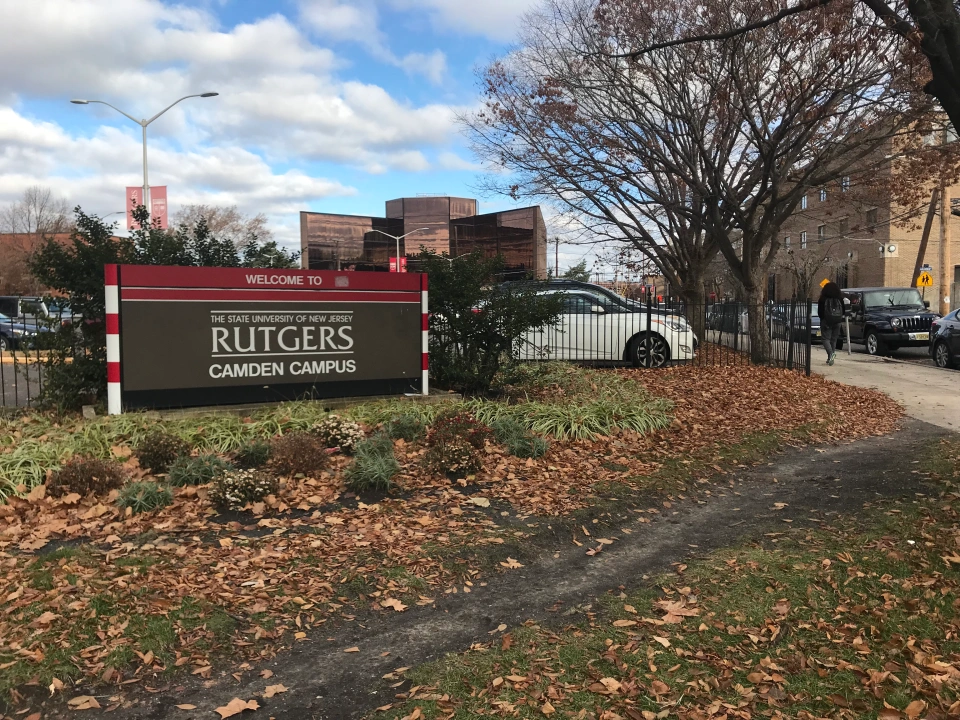
Rutgers University, Camden Campus, New Jersey.
A 2008 article in the American Medical Association’s ethics manual recommended that physicians, not patients , be the ones to learn another language.
Doctors must treat illnesses based on the reality of their patients , which should include whether the patients lack English proficiency, the article says. It’s also easier to find resources to teach Spanish to a smaller group of doctors than it is to teach, say, 30,000 potential patients English.
“The ethical case for all Spanish-speaking physicians is based on the idea that all patients should have control over and decisions about their medical care,” the document reads.
In the Rutgers program, which includes classes in Spanish for Health Professionals, civic engagement, and community interpreting, students not only speak Spanish in class but also practice the language in a health-related context . They learn about the diverse medical terminology used in Latin America and the Caribbean, and visit community organizations and health clinics in Camden, serving as facilitators when Spanish-speaking residents seek health services or counseling. Only registered students can take individual classes or complete the certificate program.
The Salvation Army Kroc Center in Camden serves as a laboratory for students to develop solutions and discuss real-life challenges with people attending the gym or the Cooper University Hospital clinic located there. Recently, students discussed the diet and nail care requirements for patients with diabetes.
“Students learn from the experiences of their classmates and visiting residents as a way to develop the compassion needed to work with patients or clients,” Pilla said.
Janell Fernandez, who is taking the civic engagement class, found that Spanish speakers “open up” to her because they can communicate better despite being in a “culturally different place . ”
“I can relate to the culture shock people go through when they come here for the first time, so this makes a big difference because it makes others feel welcome, at least when it comes to the language aspect,” said Fernandez, 21, who was brought by her parents from the Dominican Republic when she was 12. She hasn’t decided whether she wants to be a doctor or a nurse.
Sujay Ratna, 19, moved from Virginia to study biology at Rutgers-Camden. Having taken Spanish classes in middle school and high school, this is the first time he’s put those skills to use .
“This class has opened my eyes to the real-life applications of Spanish, especially because I plan to be a doctor in the future,” he said.