
At the entrance of the exhibit, waves bathe your feet in the form of a hologram. And, if you close your eyes and listen closely, you might find yourself walking on a Caribbean beach at dusk. This is how the American Museum of Natural History (AMNH) attempts to persuade your senses and submerge all its visitors into the most recent scientific discoveries in the depth of the ocean.
Like a multimedia version of BBC’s Blue Planet II documentary series, the exhibit features the latest advances in ocean exploration, and encourages scientific and public interest in the understanding of marine life and the marine environment, considered one of the least studied areas of the planet.
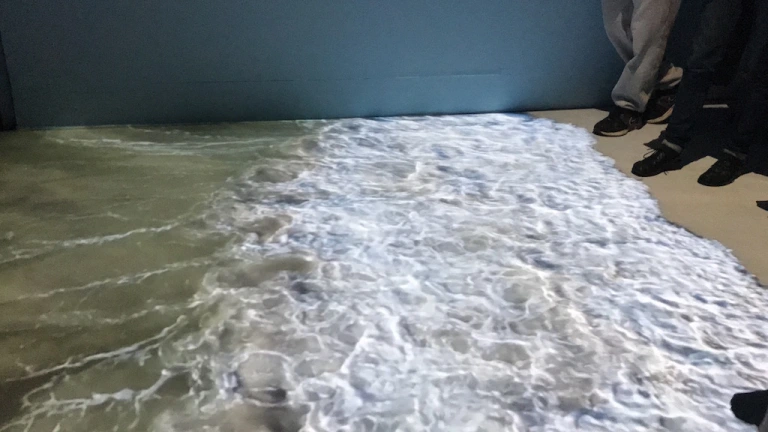
Lapping waves of a virtual beach invite visitors to an underwater journey.
Museum scientists and supporting experts have been using virtual reality, robotic engineering, satellite monitoring and high-resolution imagery to identify those animals and plants that live in deep salty waters and remain in the unknown.
“We know more about space than we do about the oceans,” said Estefanía Rodríguez, associate curator with the Museum’s Division of Invertebrate Zoology.
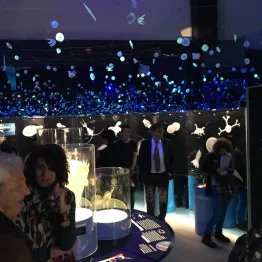
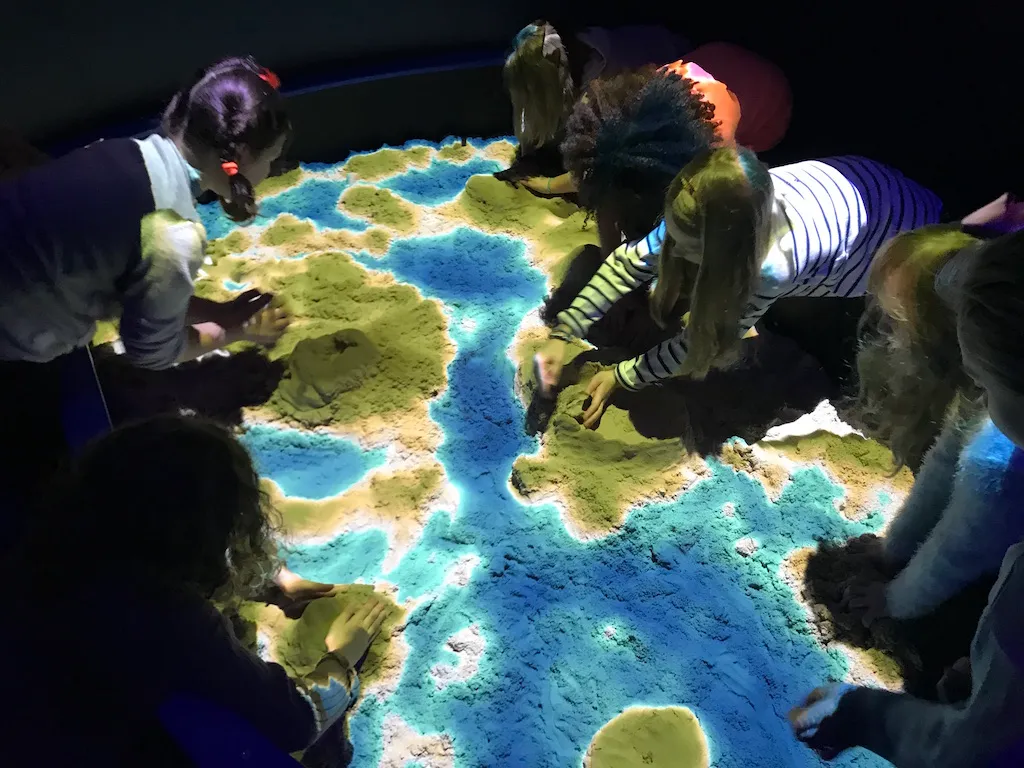
Reshaping the urgency to explore the deep blue, #UnseenOceans showcases live bioflourescent seahorses, giant plankton sculptures and a sand box that simulates the sea floor surface, for all to dive into the significance of marine diversity and its importance in a world with excess pollutants and a regularly changing climate.
“This is like a scientific olympics, not for gold, but to save the planet and ourselves,” said Ellen Futter, President of the AMNH, during a media preview on March 6, 2018.
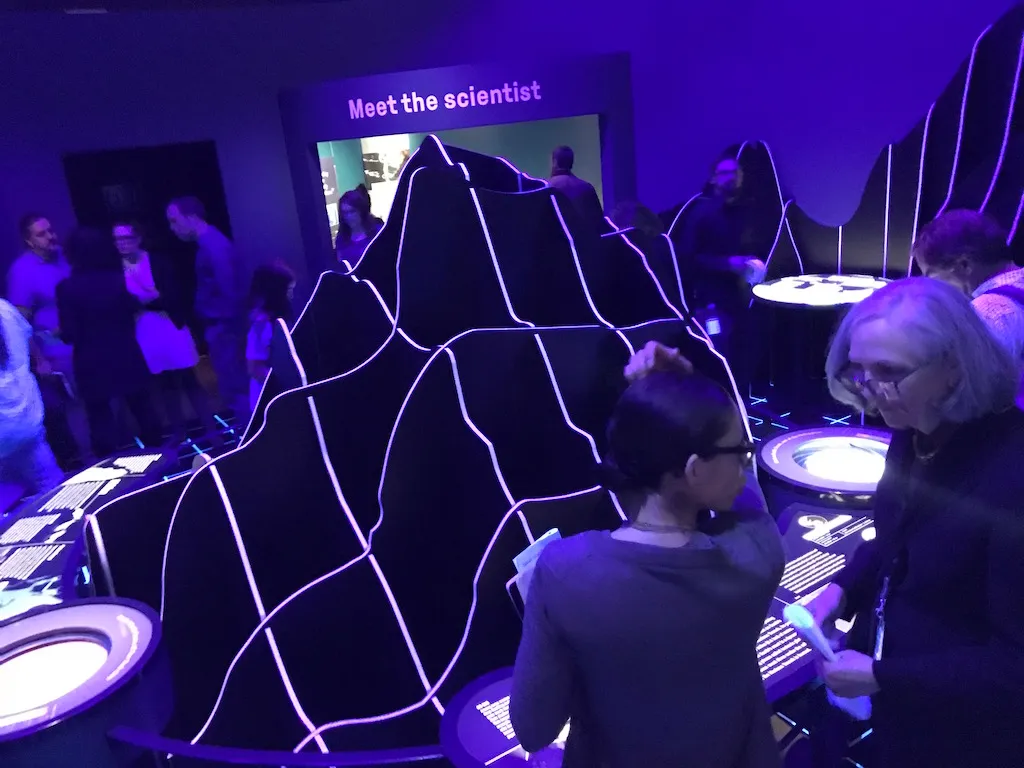
It’s more than obvious that this exhibit wants to generate awareness about what oceans’ mean to humanity and our lives on Earth: Eight exhibition areas at the Le Frank Family Gallery will host interactive topography of the oceans, fossils and photos of large animals, microscopic images and models never seen before and the story of the conservationists and experts who took a deep breathe in the waters of Galápagos, the Hawaiian islands and other areas near the Antarctic sea.
Unseen Oceans will share the secret lives and giant encounters for almost a year long, from March 12, 2018 to January 6, 2019.
From the start, the waves wash over your feet in the form of a hologram. And you hear the waves right next to you, just as if you were walking on a beach. The American Museum of Natural History in New York wants you to immerse yourself in the scientific discoveries they’ve made in the depths of the oceans.
As a multimedia version of the BBC’s Blue Planet II documentary series , the exhibition showcases the latest advances in ocean exploration, and generates scientific and public interest in understanding marine life and the environment of the sea , considered one of the least studied areas of the planet.
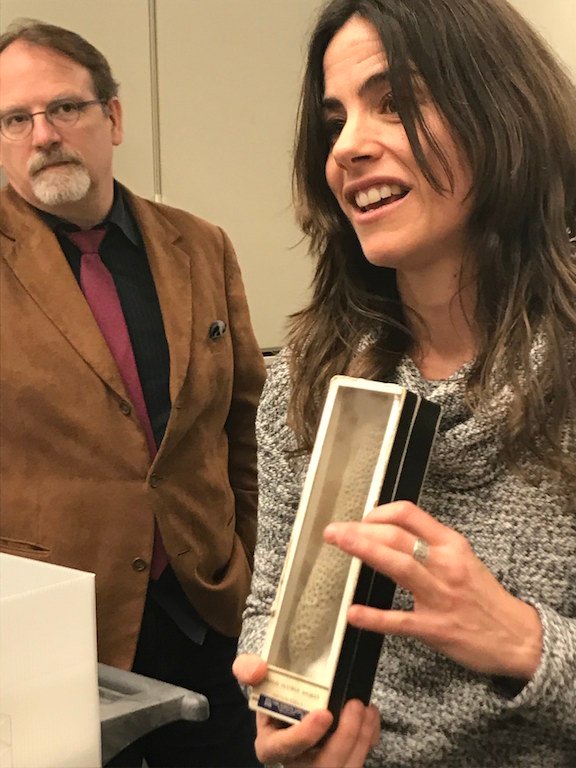
Estefanía Rodríguez, Ph.D., holds a glass sea sponge in its case. It’s one of the 2.4 million species collected and studied at the AMNH. Curator Mark Siddall, behind. March 6, 2018.
“We know more about space than we do about the oceans,” said Estafanía Rodríguez , associate curator of the museum’s invertebrate zoology division.
They use virtual reality, robotics, and high-resolution images to identify the animals and plants we’ve yet to discover that live in deep salt waters. There are biofluorescent seahorses , giant plankton sculptures, and a massive sandbox, resembling the surface of the ocean floor.
The #UnseenOceans exhibition opens to the public on March 12 , until January 6, 2019 .