For the Moriviví Group’s Valentine’s Day celebration, 30 women and men spent a morning chatting, enjoying cups of coffee , pastries, and a lunch of fruit salad, stewed chicken, and mangú.
While that Saturday was all about food and recreational games, the monthly support group where people share their cancer struggles is often more instructive.
“Here, I meet people with more difficult experiences than mine, so I can ask them if it’s normal for my hands to be blue and swollen,” said Jakelinne Procel, 44, who began meeting with the group last July after being diagnosed with stage II breast cancer.
Moriviví is the name the group chose since it began meeting in 2014 to provide emotional and language support , as well as caregiving workshops, in a conversational environment for the Latino communities of North Philadelphia.
There are several breast cancer support groups in the area, both general (the American Cancer Society) and specific (the Supporting Sisters Breast Cancer Group, which focuses on African-American women, or the Young Survival Coalition, for women under 40). Similarly, said Marla Vega, who coordinates the group with María Barrera, Hispanic and Latino cancer patients have specific needs that go beyond just being able to speak Spanish.
“There are women who don’t have health insurance, who recently came to Philadelphia, who don’t speak English, who don’t know how to use public transportation, and we go to where they are to teach them how to get to the city,” said Vega, 65, who works at Health Promotion Counsel, the social services organization that supports the group.
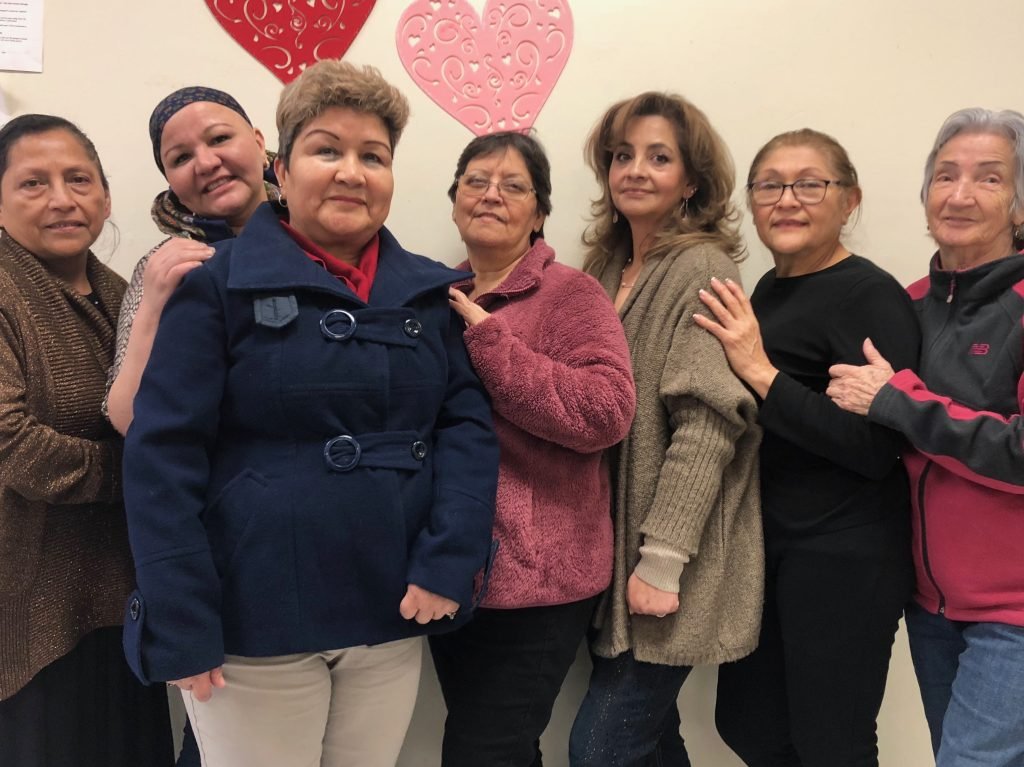
From left to right: Lilia Robinson, Jakelinne Procel, María Valles, Gladys Díaz, Martha Carvajal, Rosa Velázquez, and Amanda Mejía. They participate in the monthly support group.
Vega isn’t a breast cancer survivor, but her work as a patient navigator—helping people with health insurance issues, scheduling mammograms, or finding outside support—made it clear to her that these women needed more guidance . Being part of the group, which meets the third Saturday of each month at Aspira’s Hunting Park campus, can mean connecting with a companion to get to radiation treatment, or learning the ways of the SEPTA bus system.
“Now I can see the needs of the community and this city: it’s that sense of support and protection that we can’t find anywhere else,” said Luis Orozco, 64, who participated for the first time that day with his wife, Luz, 60, who has attended regularly since May.
Grupo Moriviví operates with a board of directors and an annual work plan, and as Vega approaches retirement, he wants to establish the group as a nonprofit organization so he can dedicate more time to it.
“Whether someone is diagnosed after a regular screening or has been struggling with this for years,” she said, “at least the community has a chance to come together and find relief here.”
