It was 7:00 p.m. and Carlos Leerdam, 42, was waiting his turn to play at one of eight domino tables after a long day at work. He said El Deportivo is his “second home . ”
The Dominican Sports Cultural Center in New York has been a space for organizing and entertaining Dominicans in the United States since its founding in 1966.
“All the institutions from there (the Dominican Republic) and the tri-state area come here to share in fellowship, to carry out their activities, to feel at home,” said Sandra Espaillat Díaz, 40, a member of the fraternity who became the institution’s first female president in 2005.
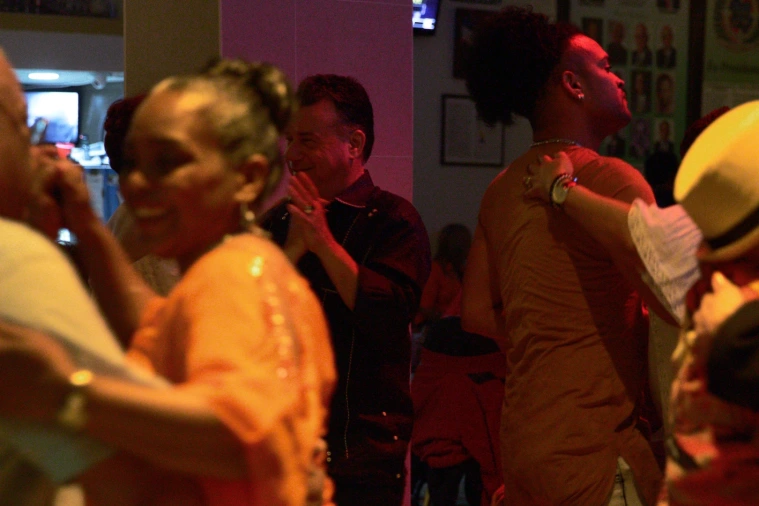
On Friday nights, salsa is the only dance, with dancers from all over the world participating to improve their techniques and rhythmic moves.
In her book “ Dominicans in New York City: Power From the Margins ,” Latin American studies professor Milagros Ricourt wrote that social, political, and sports clubs multiplied in New York City, specifically in Washington Heights, in the 1960s as a way to show loyalty to the Dominican Republic and continue traditions.
After the Trujillo dictatorship ended and the U.S. invasion of 1965, associations like El Deportivo played a decisive role in organizing the Dominican community and its development in New York City. At least, that’s how Howard Jordan explains it in ” Dominicans in New York: Getting a Slice of the Apple .”
Today it is one of the few established venues serving the entertainment and identity needs of the Latino and Caribbean communities in Upper Manhattan .
“There is no strategic plan for artistic and cultural diversity in Northern Manhattan—in fact, there isn’t one for the city at all,” said Aaron Simms, director of the Northern Manhattan Arts and Culture Coalition (NMAC).
El Deportivo members travel from Yonkers, Mount Vernon, and other boroughs to celebrate the empowerment and community development of the Dominican people. Fifty-one years after its founding, club leaders fear that the association’s legacy will be tarnished by the lack of interest of younger generations of Dominicans born in the United States.
[metaslider id=”2594″]
“The children of members don’t like coming to the club. They say we come here to drink rum and beer, and that’s it,” explained José Mendoza, 55, the club’s current president, who has been a member for 35 years.
Even so, El Deportivo brings together different generations of Dominicans in the United States, their children, and friends, in its own space located at 2088 Amsterdam Avenue in Washington Heights.
Some people come in search of acceptance and stability , like Miguel Ángel Buenrostro, 31, a veteran of Mexican-Puerto Rican descent who frequents the place after moving from California. “You feel that positive energy, and they accept me for who I am,” he said.
“I go there to soak up the atmosphere, because you feel like you’re in the Dominican Republic without having to buy a flight,” shared Edward Correa, 51, an American of Dominican origin who fought in the Gulf War, Iraq War, and Afghanistan War.
Every weekend, it becomes a time machine when it brings together the best salsa school dancers of today with the largest sonero club, in sequined hats and patent leather shoes.
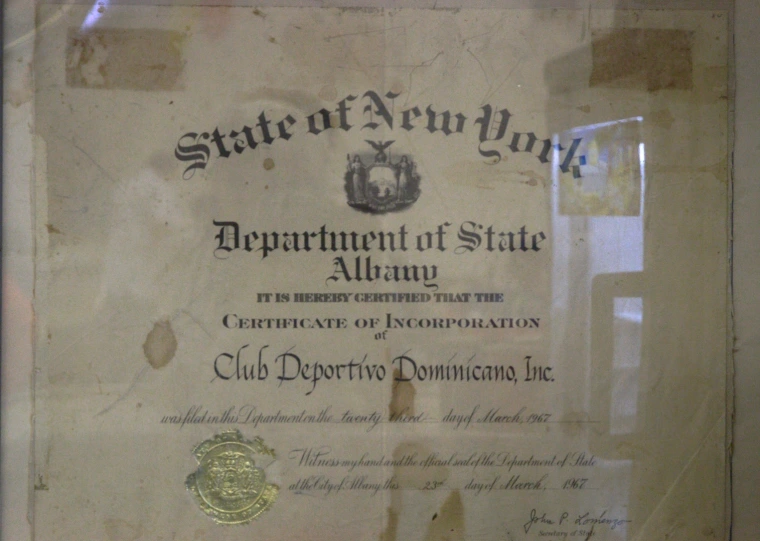
The Dominican Sports Club was founded on March 23, 1966. It received a proclamation from Congressman Adriano Espaillat on March 21 in Washington, D.C.
“I come almost every day, and I bring my grandchildren on the weekends. We’re like brothers here,” says Leerdam, a Dominican of Dutch descent who has been a member of the institution for more than 20 years.
